
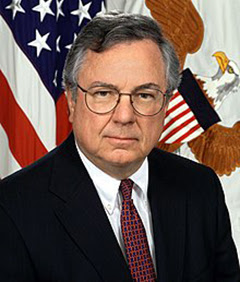
Speaking to Bob Short in 2010, Powell Moore said of his hometown, “I’m proud of the fact that I’m from Milledgeville, Georgia. Some people say it’s a small town in Middle Georgia. I think it’s a lot more than that.” Moore and Short would go on conjuring the names of several individuals of considerable import who had called Milledgeville home over the years.
Powell Allen Moore, who died on August 13, surely belongs on any shortlist of that city’s—and this state’s—prominent citizens. Although he never held elective office, Moore served for over five decades in the penumbras of power—both inside and outside government while living and working in Washington D.C. His was truly a life of achievement and significance, and his extensive career is documented in the Powell A. Moore Papers, which he donated to the Russell Library in 2014. His complete Reflections on Georgia Politics interview with Bob Short can be viewed online.
Born on January 5, 1938 to Jere and Sarah Moore, Powell spent his entire childhood in Milledgeville where his father co-owned and edited the city’s Union-Recorder newspaper. He attended high school and junior college at the Georgia Military College Preparatory School.
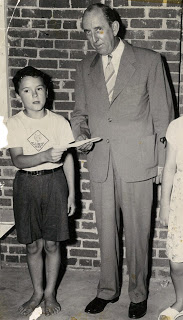
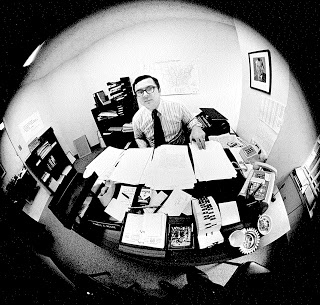
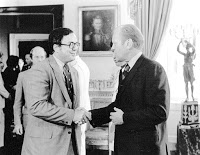
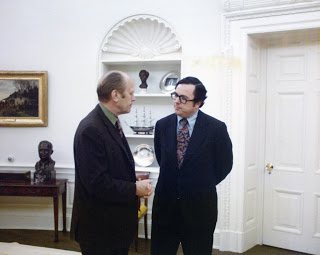
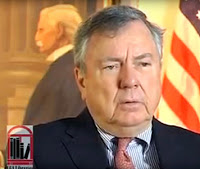
On a personal note, I first met Powell Moore when I was still a graduate student in the UGA History Department. At that time, I did not know the full extent of Powell’s impressive resume. If I had, I would have probably been too nervous to strike up conversations for fear of exposing my ignorance of issues and events that he had participated in firsthand. He shared freely with me of his time, insights, and experiences, and I never saw him in a less-than-genial mood. As a former Russell staffer and foundation trustee, Powell was an unflinching supporter of and advocate for the Richard B. Russell Library—its mission, programming, and staff.
Ashton Ellett
Postscript: Remembering Russell Library’s Powell A. Moore
Powell Moore first visited the Russell Library in the late 1970s. I remember coming in on a Saturday, when we were normally closed, to accommodate his visit. He was, after all, a former Press Secretary to Senator Russell. The tour was short; there was not much to show in the early days, but we shared at least three hours of reminiscing about the senator and imagining the library’s future.
As Ashton has written, Powell was a busy man. Even so, he never missed an opportunity to benefit the library. He was a mentor, adviser, advocate, colleague, and co-worker. Over the years, I treasured his friendship. Many members of our staff were touched by his engagement.
Powell arranged special visits for two of the senator’s closest colleagues, John Stennis and Robert Byrd; not only attended programs, recommended and engaged program speakers but also participated in one of our highly rated programs on intelligence gathering as well as several others; agreed to donate his papers, and helped to organize them; assisted in signing other donors; wrote articles and generated publicity for us; gave annually to the Russell’s oral history program and served as one of our expert interviewers on numerous occasions.
One of our favorite memories is a trip four of us made to McLean, VA, to collect more papers from Eugene Methvin, a Georgian and former editor of Reader’s Digest. Powell met us there to interview Gene, while some of us packed files and loaded a van. For lunch, he took us to one of his and Gene’s favorite Greek restaurants in the area and followed that with a quick driving tour of the cherry trees in bloom. The conversation was lively and fun. I believe we made one of our first Russell Tweets that afternoon.
Every visit with Powell ended in a conversation prompted by his “What can I do for the library?” That he will be missed is true on so many levels, yet all too inadequate in light of his generosity and spirit.
Sheryl Vogt